Cheap Car Insurance on Social Media? How NI Drivers Can Spot a Ghost Broker
For many young drivers in Northern Ireland, getting on the road is a major milestone.
A first car can mean more independence, easier travel to work or college, and more flexibility in everyday life. But for many drivers, the cost of insurance can quickly become one of the biggest barriers.
That cost pressure has created an opening for a type of scam known as ghost broking.
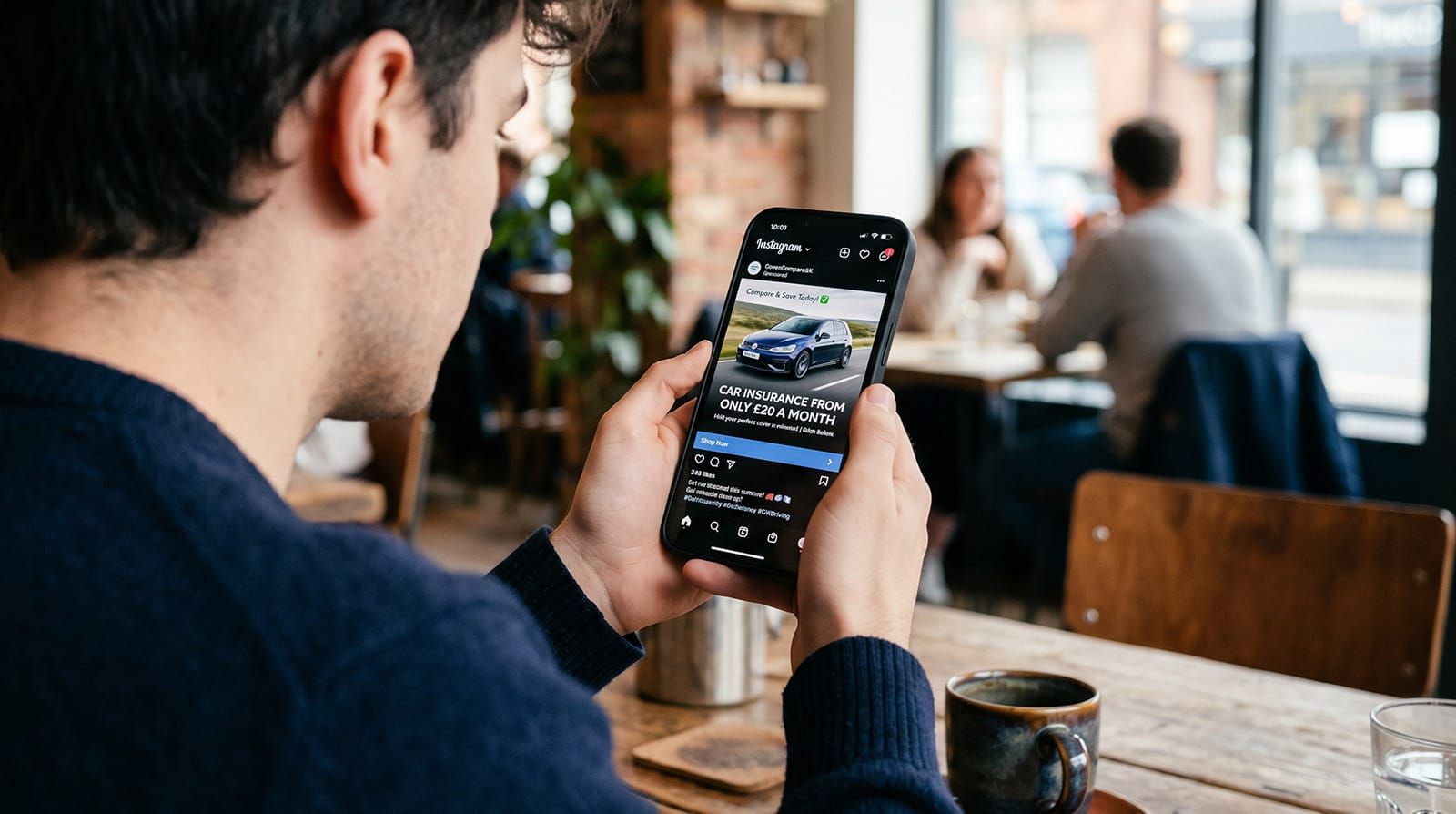
Ghost brokers are fraudsters who pretend to be legitimate insurance brokers. They often offer cheap car insurance through social media, messaging apps or online groups. The price can look attractive, especially when mainstream insurance quotes feel out of reach.
The problem is that the policy may not be valid.
Some policies are completely fake. Some are real policies arranged using false information. Others are set up, shown to the buyer, then cancelled soon after payment.
For the driver, the outcome can be serious. They may believe they are insured, but discover later that they have no valid cover.
Why this is relevant to NI drivers
Northern Ireland drivers already face a challenging insurance market.
CompareNI’s 2026 car insurance index lists the average Northern Ireland premium at £624.60, compared with a UK average of £579.52. The same data lists the average premium for Northern Ireland drivers aged 17 to 24 at £1,386.26.
In Belfast, the average premium across all ages is listed at £870.69. For 18 year old drivers in Belfast, CompareNI lists an average figure of £3,151.66.
These figures show why a much cheaper online offer can catch attention.
For a young driver trying to balance the cost of a car, insurance, fuel, tax and maintenance, a low price can look like a practical solution. That is what makes ghost broking difficult to spot. It often appears in the same places people already use every day: Instagram, TikTok, Snapchat, WhatsApp, Facebook and online community groups.
The scam does not rely only on poor judgement. It relies on real financial pressure.
| Fact | Detail |
|---|---|
| Average NI car insurance premium | £624.60 according to CompareNI 2026 data. |
| Average UK premium | £579.52 according to the same CompareNI data. |
| Average NI premium for drivers aged 17 to 24 | £1,386.26 according to CompareNI. |
| Typical uninsured driving fixed penalty in NI | PSNI lists a £200 fine, six penalty points and vehicle seizure pending valid documents. |
| New driver impact | Six or more points within the two year probationary period can lead to licence revocation and retesting. |
What a ghost broker does
A ghost broker presents themselves as someone who can arrange car insurance at a lower price.
They may use a social media profile, a messaging app, a local group or a recommendation from someone else. The offer may include a professional looking document, a policy number, a certificate or a payment receipt.
The policy itself may fall into one of three broad categories.
First, the policy may be completely fake. The driver receives documents, but no insurance policy exists.
Second, the policy may be real but arranged using false information. This could include an incorrect address, job title, mileage, named driver, main driver or vehicle use. A lower price may be achieved by entering details that do not reflect the driver’s real situation.
Third, the policy may be set up and then cancelled. The driver sees proof of cover, pays the broker, and later the policy is cancelled without the driver realising.
In each case, the driver may believe they are covered. The problem often only appears when the car is stopped by police, when the driver checks with the insurer, or when a claim is made.
Why a fake policy can create serious problems
Driving without valid insurance is not just an admin issue.
In Northern Ireland, PSNI guidance lists uninsured driving as an offence that can be dealt with by fixed penalty. The listed penalty is a £200 fine and six penalty points. The vehicle can also be seized pending production of valid insurance and other required documents.
For new drivers, six points can be especially serious.
The Department for Infrastructure states that if a new driver accumulates six or more penalty points during the two year probationary period, their licence will be revoked and they will need to be retested.
That means the impact of a fake insurance policy can extend beyond the original payment. It can affect a driver’s mobility, work, education, future insurance costs and confidence on the road.
Why social media makes the scam harder to spot
Social media has made many parts of buying and selling feel more informal.
People use it to find cars, compare prices, ask questions, join local groups and get recommendations. That familiarity can make a scam feel more trustworthy than it is.
A ghost broker may look convincing because the conversation feels normal. They may use friendly language, quick replies and a profile that appears active. They may say they have helped other young drivers. They may use urgency to make the buyer feel they need to act quickly.
This is one of the reasons the issue matters locally. In Northern Ireland, word of mouth and community recommendations carry weight. A message from a friend of a friend, or a profile shared in a group, can feel more reliable than a random advert.
But insurance is a regulated financial product. A social media profile is not proof that the person behind it is authorised to arrange cover.
Warning signs that should raise concern
| Warning sign | Why it matters |
|---|---|
| The quote is much cheaper than every other price | A very low price may be based on false details or no real policy at all. |
| The seller only uses social media or messaging apps | A genuine broker should have official contact details and a clear business presence. |
| Payment is requested to a personal account | This can make it harder to recover money if the policy is fraudulent. |
| The buyer is pressured to pay quickly | Urgency can be used to stop someone checking the details properly. |
| The policy details are wrong | Incorrect details can make a policy invalid or cause problems if a claim is made. |
| The seller discourages contact with the insurer | A legitimate policy should be easy to confirm directly with the insurer. |
The FCA Firm Checker
The Financial Conduct Authority provides a Firm Checker that can be used to check whether a firm is authorised and has permission to provide the service being offered.
This matters because scammers may copy the name of a real business. A firm name on its own is not enough.
The contact details should match the official listing. That includes the phone number, website, email address and firm reference number. If a person provides different details through WhatsApp, Instagram or another channel, that difference is worth checking.
The key point is that the firm should be traceable through official routes, not only through a social media profile or private message.
Checking the vehicle insurance database
The Motor Insurers Bureau provides a free Check Your Vehicle service. It uses Navigate, the central record of insured vehicles in the UK, to show whether a vehicle has a live insurance policy recorded against it.
This can be useful, but it is not the full picture.
MIB explains that an insured result means there is a live policy against the vehicle. It does not confirm whether the policy is the correct one for how the vehicle is being used.
That distinction matters with ghost broking.
A fraudster may arrange a real policy but enter false details. The vehicle could appear insured, while the driver may still be exposed because the policy does not match the true circumstances.
A complete check looks at more than the registration number. It also looks at the driver, address, occupation, mileage, use type, named drivers, main driver and any modifications.
What happens if a driver thinks the policy is fake
If a driver believes they may have bought fake insurance, the first issue is whether the car is currently insured.
The insurer can confirm whether a policy exists, whether it is active, whether the driver is named on it and whether the details are correct. The safest contact details are those published by the insurer or listed through official firm records.
Payment providers may also be able to record the payment as fraud and explain what recovery options are available.
Evidence is important. Messages, screenshots, social media profiles, phone numbers, payment details, emails and documents can all help show what happened.
NI Direct says fraud, scams and related cybercrime should generally be reported to Action Fraud, unless a PSNI response is needed. PSNI may be contacted where the fraud has just happened, where the suspect is known and lives in Northern Ireland, where the victim is vulnerable, or where police need to secure evidence.
These scams can be embarrassing for victims, but they are designed to look credible. Reporting can help prevent the same approach being used on other drivers.
The wider issue for young drivers
Ghost broking sits within a wider challenge.
Young drivers need insurance before they can drive legally, but they often face some of the highest premiums in the market. For many families, that cost affects which car is affordable, when a young person can get on the road, and how easily they can access work or education.
That does not make unsafe or invalid cover a solution. It does explain why the scam is effective.
The important distinction is between a competitive insurance quote and an unrealistic one.
A competitive quote should still come from an authorised provider, through traceable contact details, with accurate information and clear documents. An unrealistic quote may come with pressure, vague explanations, incorrect details or payment routes that do not look like a normal insurance transaction.
Summary
- Ghost brokers pretend to arrange cheap car insurance, often through social media or messaging apps.
- The policy may be fake, invalid because of false details, or cancelled after payment.
- Young drivers are a common target because insurance costs are high.
- Driving without valid insurance in Northern Ireland can lead to a fine, penalty points and vehicle seizure.
- For new drivers, six penalty points during the probationary period can lead to licence revocation and retesting.
- A vehicle appearing insured on a database does not automatically prove that the policy is correct for the driver or how the car is being used.
- The FCA Firm Checker, direct contact with the insurer and careful review of policy details are important safeguards.
- Cheap insurance only helps if it is real.
Sources and useful links
Financial Conduct Authority: Insurance and warranty scams
https://www.fca.org.uk/consumers/insurance-warranty-scams
Financial Conduct Authority: Firm Checker
https://www.fca.org.uk/consumers/fca-firm-checker
Financial Ombudsman Service: Ghost brokers haunting the insurance market
https://www.financial-ombudsman.org.uk/news/ghost-brokers-haunting-insurance-market
CompareNI: Car Insurance Price Index Northern Ireland
https://www.compareni.com/car-guides/car-insurance-index-ni
PSNI: Fixed Penalty Notices
https://www.psni.police.uk/fixedpenaltynotices
Department for Infrastructure: Graduated Driver Licensing FAQs
https://www.infrastructure-ni.gov.uk/articles/graduated-driver-licensing-faqs
Motor Insurers Bureau: Check insurance details
https://www.mib.org.uk/check-insurance-details/
Aviva: Ghost broking
https://www.aviva.com/newsroom/news-releases/2025/11/ghost-broking-surges-twenty-two-percent-in-two-years-aviva-urges-crackdown-to-protect-young-drivers/