Hyundai IONIQ 6 N: the electric performance car with a point to prove…
Hyundai’s latest N model wraps super-saloon pace, track-honed software and everyday EV usability into one sharply focused package as I found out thanks to Daly’s Garage Belfast.
There was a time when the idea of a genuinely entertaining electric performance car felt like a contradiction. EVs could be devastatingly quick, certainly, but speed alone rarely makes a memorable driver’s car. Hyundai’s N division has spent the past few years challenging that assumption, first with the multi award-winning IONIQ 5 N and now with the IONIQ 6 N, a sleeker, lower and more aerodynamically minded performance EV aimed directly at drivers who still care about feel, adjustability and character.
Priced in the UK from £65,800, the IONIQ 6 N arrives as a single, highly equipped specification rather than a maze of trim levels. That positioning places it firmly in serious performance-car territory, but the numbers make clear why Hyundai believes it belongs there. With N Grin Boost engaged, the dual-motor powertrain produces 650 PS and 770 Nm of torque, enough to launch the car from 0-62 mph in 3.2 seconds using N Launch Control and on to a top speed of 160 mph.
Yet the headline acceleration is only part of the story. Hyundai N’s philosophy is built around three ideas: Corner Rascal, Racetrack Capability and Everyday Sportscar. In simple terms, that means the IONIQ 6 N is not intended to be a one-trick electric dragster. It is designed to change direction eagerly, sustain hard use on circuit and still behave like a usable road car when the school run, commute or motorway slog replaces the apex and braking marker.
The agility work starts underneath. Hyundai has revised the suspension geometry, lowered the roll centre and fitted stroke-sensing electronically controlled dampers. The aim is to give the car a sharper front end and greater body control without turning it into a brittle track refugee on real roads. New bushing applications, increased axle stiffness and revised mount damping are there to add precision while filtering out the harshness that can make powerful EVs feel heavy and blunt.
At the rear, an electronic limited-slip differential actively manages torque to help the IONIQ 6 N put its power down cleanly while tightening its line out of corners. It is joined by N Torque Distribution, which lets the driver adjust the front-to-rear torque balance through 11 levels. Combined with N Pedal, a system designed to increase lift-off rotation and tuck-in response, the result is an EV that promises more than point-and-squirt pace. It is built to be tuned by the driver, corner by corner.
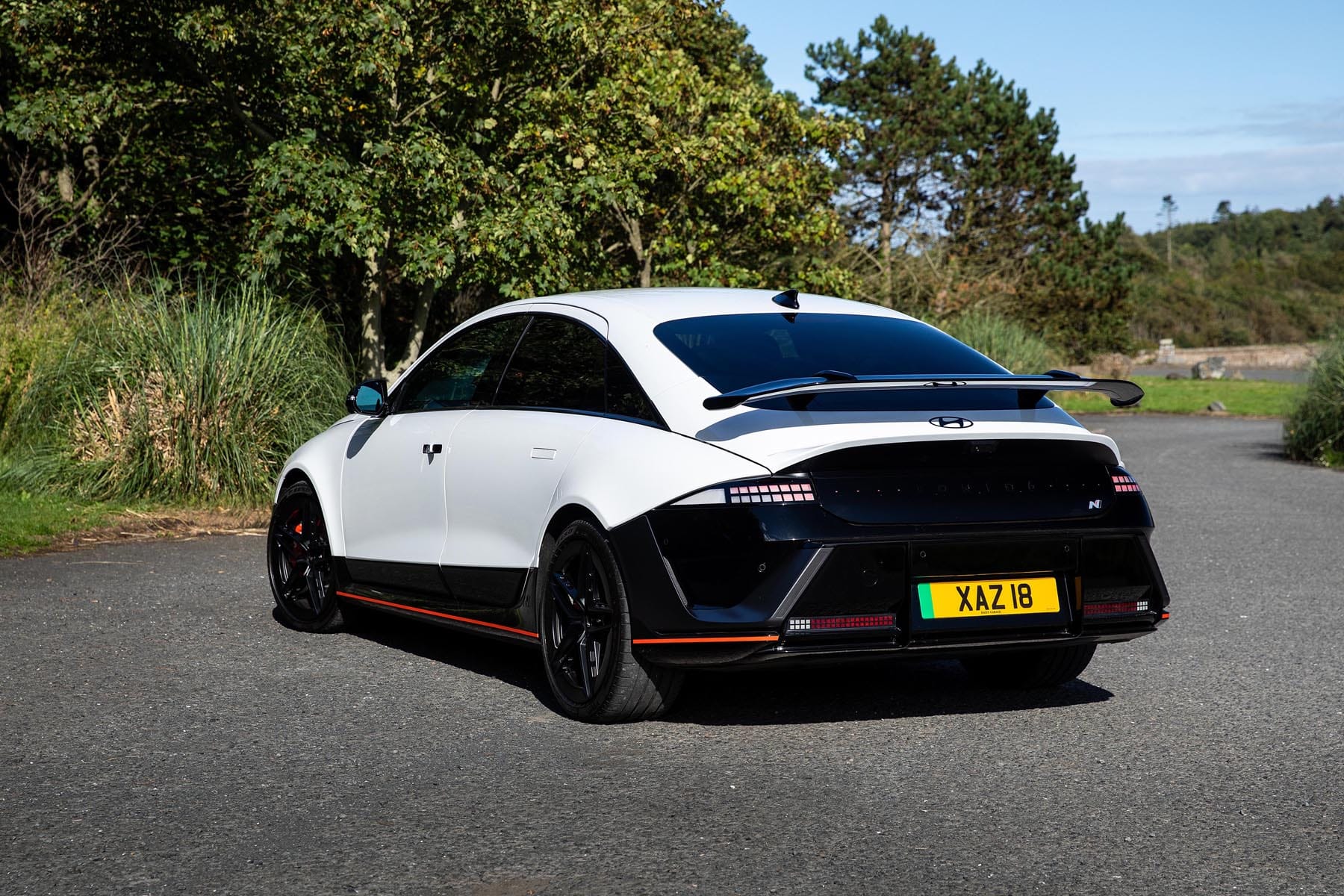
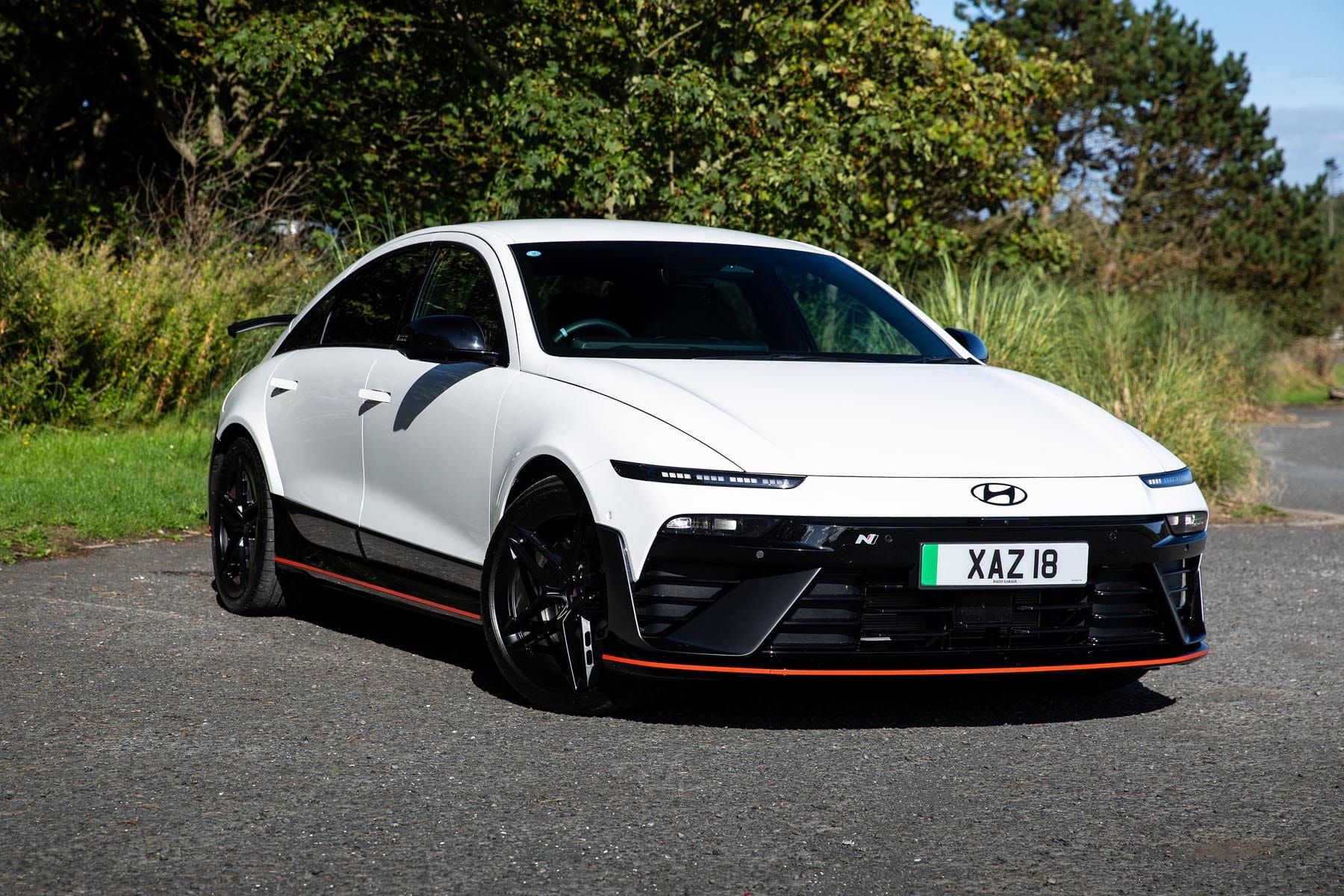
The bodywork plays its part too. A swan-neck rear wing, widened arches and a drag coefficient of 0.27 give the car a more assertive stance while improving high-speed stability. The specification includes 20-inch wheels and bespoke 275/35 R20 Pirelli P Zero 5 tyres developed for the model, backed by serious braking hardware: four-piston front brakes with 400 mm discs and single-piston rear brakes with 360 mm discs. Regenerative braking contributes up to 0.6 g, helping preserve the friction brakes during repeated hard use.
On track, Hyundai has leaned heavily into software that makes the car feel interactive rather than remote. N e-Shift simulates the rhythm and engagement of a close-ratio transmission, while N Active Sound+ adds a tuned soundtrack through modes including Ignition, Evolution and Lightspeed. These features could sound gimmicky in isolation, but the success of the IONIQ 5 N showed that, when properly integrated, they can help reconnect the driver with speed, load and timing in a way many silent EVs fail to manage.
The IONIQ 6 N also carries over the N Drift Optimizer, allowing adjustment of drift initiation, angle and wheel spin, while N Track Manager lets owners create custom circuits, monitor lap times and compare runs using ghost-car visuals. N Battery conditioning prepares the 84.0 kWh pack for drag, sprint or endurance work, and the 800V architecture supports rapid charging from 10 to 80 per cent in around 18 minutes on a suitable ultra-fast charger.
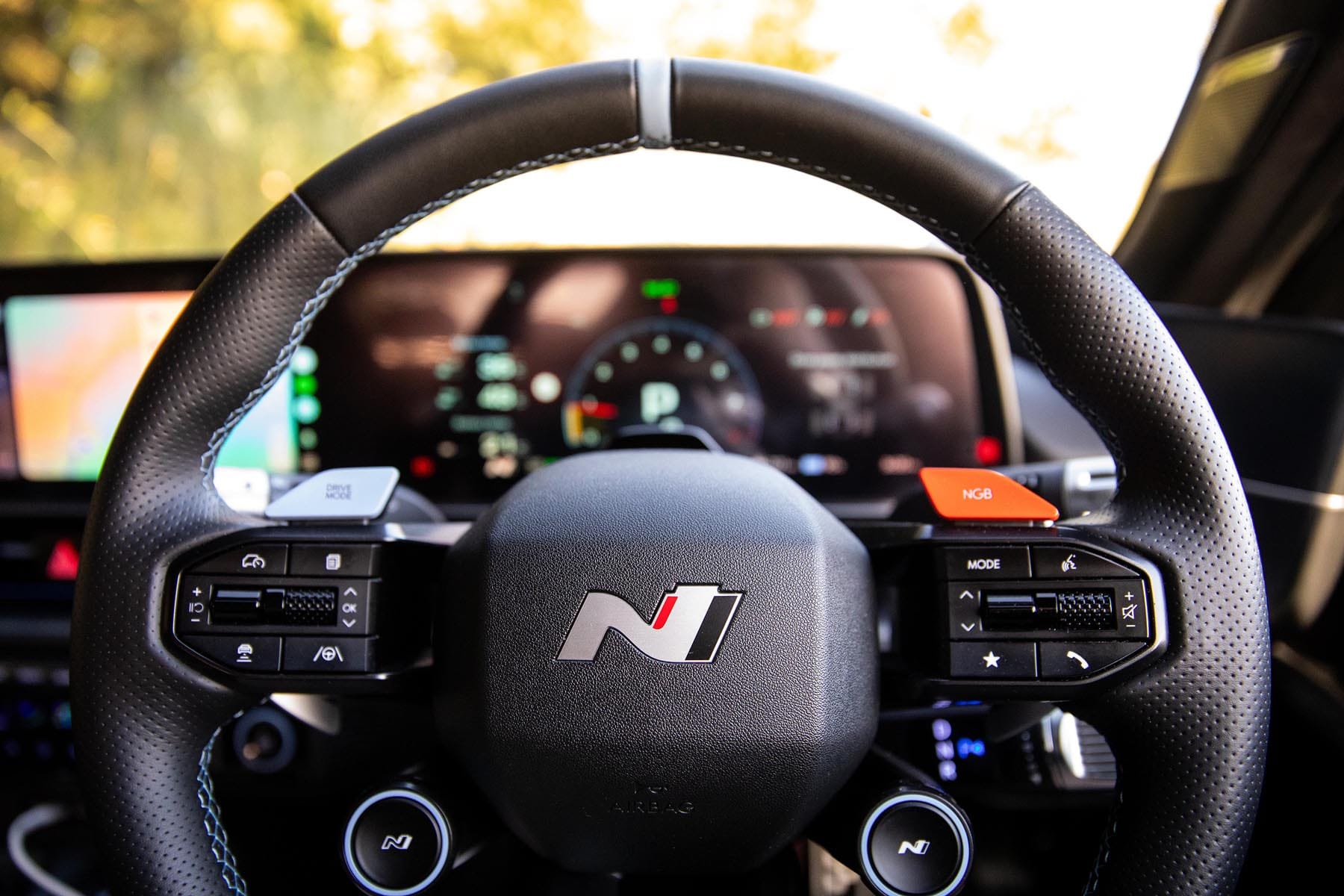
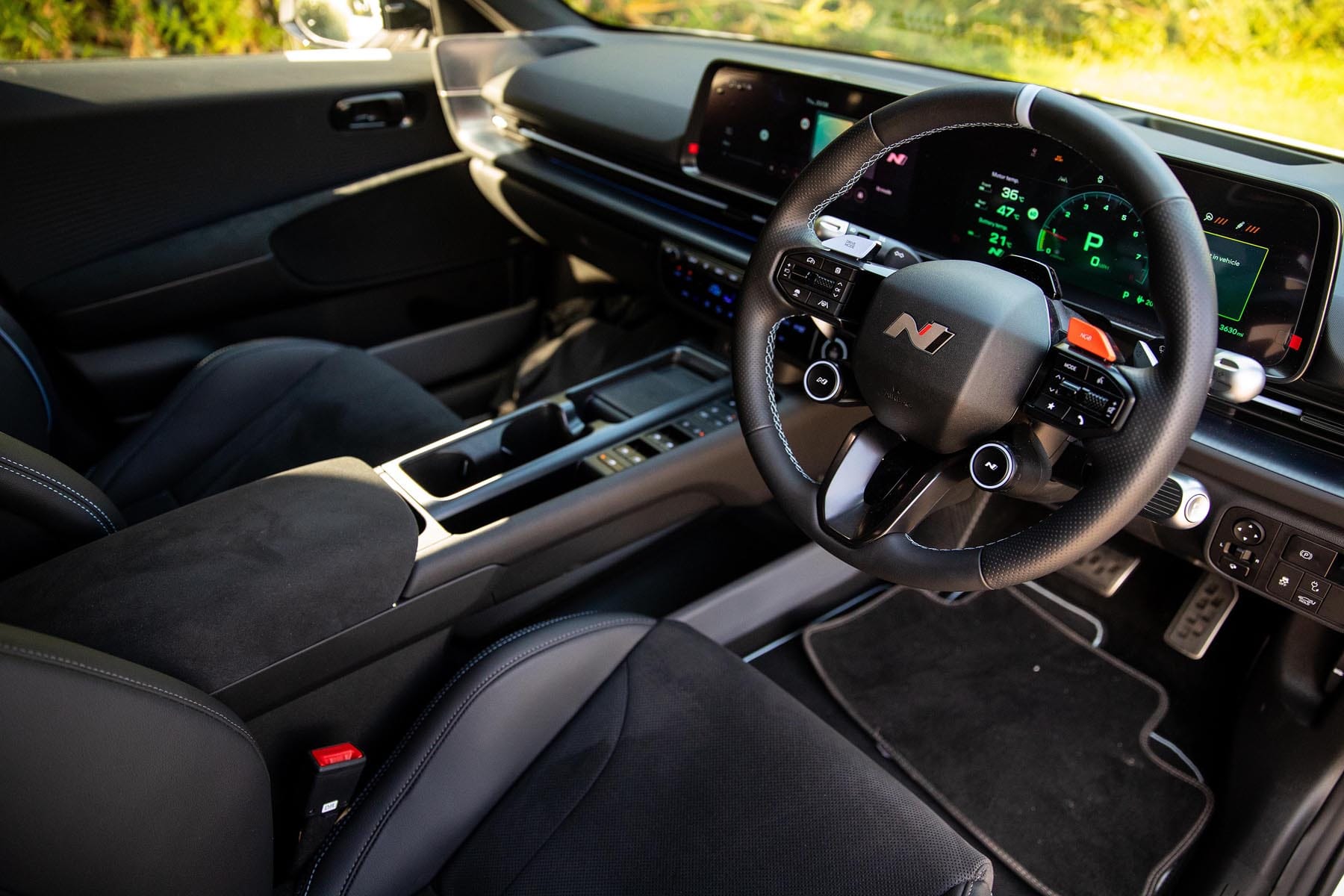
For UK buyers, Hyundai has kept the specification straightforward. The IONIQ 6 N is offered in one core version from £65,800, with the main options limited to a tilt-and-slide Vision Roof and exterior paint choices. Colours include Performance Blue Pearl, Abyss Black Pearl, Serenity White Pearl, Nocturne Grey Metallic, Nocturne Grey Matte and Gravity Gold Matte. Inside, the cabin gets black trim with Performance Blue accents, supportive bucket seats trimmed in Alcantara suede and leather, N metal pedals, a knee support pad and dedicated N buttons on the steering wheel for fast access to preferred drive settings.
It is also a practical EV rather than a stripped-out special. The quoted WLTP range is 487 km, or just over 300 miles, while the long 2,965 mm wheelbase should preserve the spacious feel associated with Hyundai’s E-GMP platform. Advanced driver assistance systems sit under the SmartSense banner, including features such as Forward Collision-Avoidance Assist, Blind Spot Collision-Avoidance Assist, Highway Driving Assist 2 and Remote Smart Parking Assist 2.
The awards context matters because Hyundai is no longer the outsider in this segment. The IONIQ 5 N collected major international recognition, including World Performance Car honours, and the IONIQ 6 N has already been praised in the UK, including being named Best Driver’s Car at the TopGear.com EV Awards 2026 and Best Electric Performance Car at the 2026 What Car? Awards. Those accolades underline the same point: Hyundai’s performance EVs are being recognised not merely for acceleration, but for making electric driving involving.
The IONIQ 6 N therefore lands with a clear brief. It must be fast enough to satisfy numbers-driven buyers, agile enough to convince sceptical enthusiasts and complete enough to justify its price as a daily car. On paper, it looks well placed: 650 PS, 3.2 seconds to 62 mph, 160 mph flat out, serious chassis hardware, rapid charging and a simplified UK specification. More importantly, it continues Hyundai N’s argument that the future of the driver’s car does not have to be quieter, heavier and less emotional. It can be electric, intelligent and still properly alive.