
Boosted Memories: Aaron Oliver’s Max Power Renault 5 GT Turbo
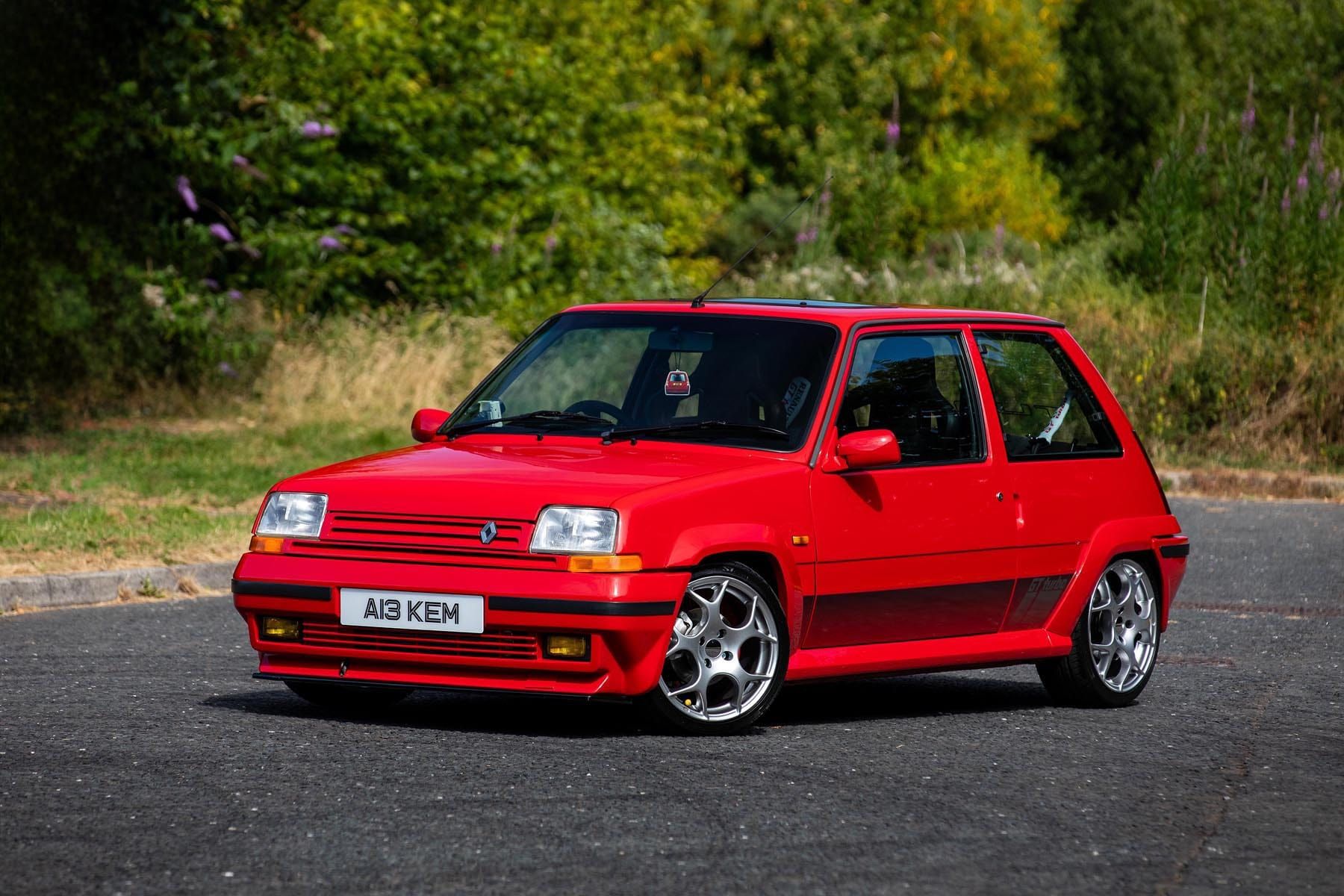
A once-famous red Renault 5 GT Turbo returns with provenance, attitude and a hard-driven second life.
There are cars you buy because they make sense, and then there are cars you buy because they never really left you alone. For Aaron Oliver, the Renault 5 GT Turbo sits firmly in the second camp. Compact, loud, boost-hungry and unapologetically of its era, it is the kind of car that gets under your skin early and stays there.
Aaron, now 45, first fell for Renault’s pocket rocket as a teenager. “I used to drive one when I was 17,” he recalls. “My girlfriend’s dad had one, and I just loved it. Ever since then I’ve been like: this is the car for me.”
That early encounter sparked a long-running obsession. Over the years Aaron has owned, started, chased or abandoned around seven Renault 5 projects in various forms: some turbocharged, some naturally aspirated, some wide-bodied, some regular, and some far more experimental than standard. There was even a Prima-style wide-body project and a car equipped with two-litre Clio 172 engine and running gear swap. Like many modified-car stories, not every build made it to the finish line, but the fascination never went away.
From Teenage Dream to Magazine Car
The red Renault 5 GT Turbo that eventually landed in Aaron’s hands was not just another unfinished project. It came with history. The car had appeared in Max Power in March 1996, wearing the unmistakable flavour of the UK modifying scene at its most confident. Back then it was associated with Kem Hussein and carried the kind of period provenance that makes surviving modified cars from that era especially interesting today.
Aaron’s route to ownership was typically impulsive. Having sold his Audi R8, he had already agreed to buy a blue Renault 5 when the red car appeared for sale. Rather than choose between them, he bought both. At one point, he found himself with three Renault 5s — proof, if any were needed, that these cars can become a habit.
After its magazine moment, the red car had slipped from the spotlight before later being restored by Jamie Franklin. It was advertised for a few months before Aaron finally took it on. His description of what happened next is blunt, affectionate and very much in keeping with the car’s character: he made it his own.
Making It His Own
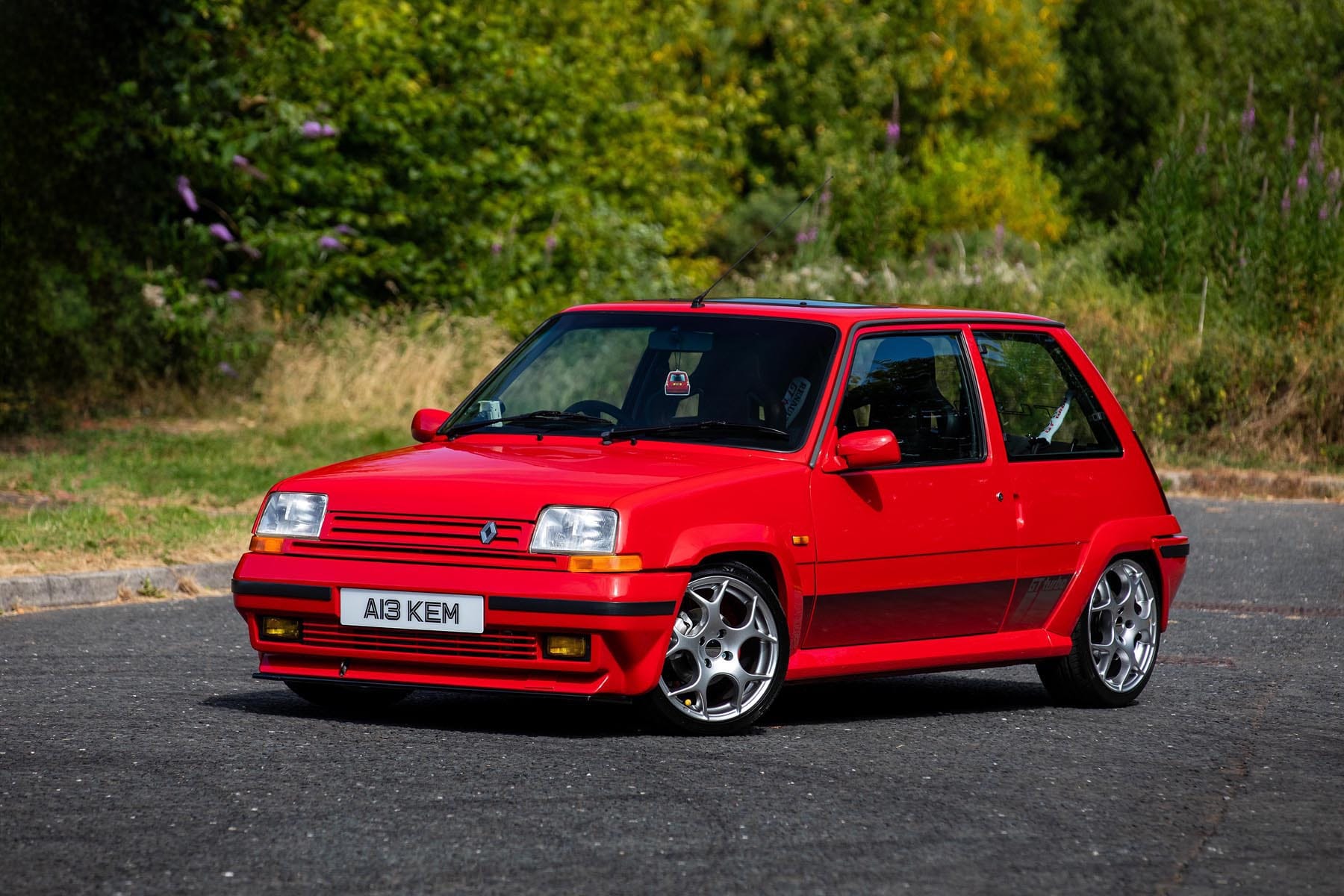
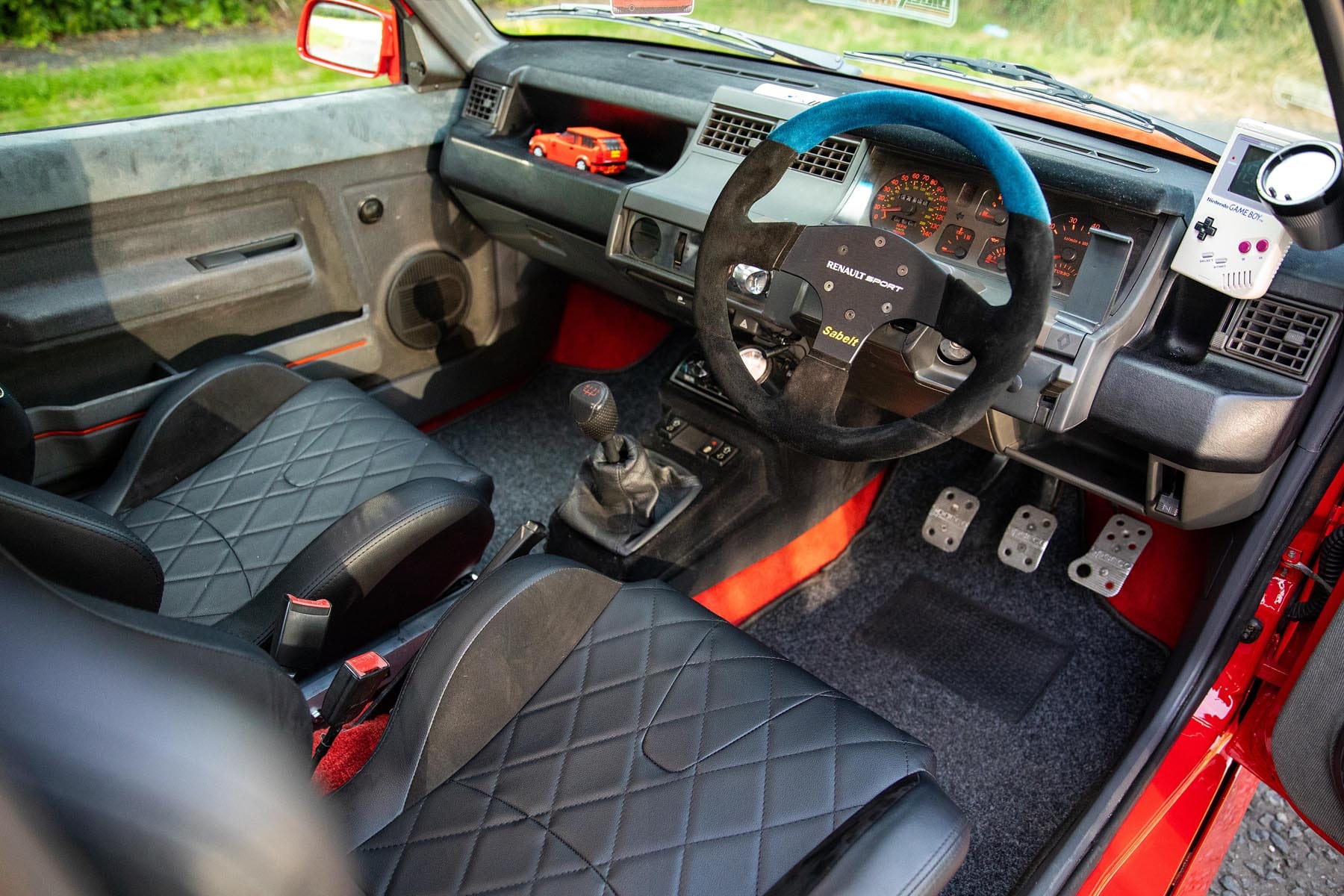
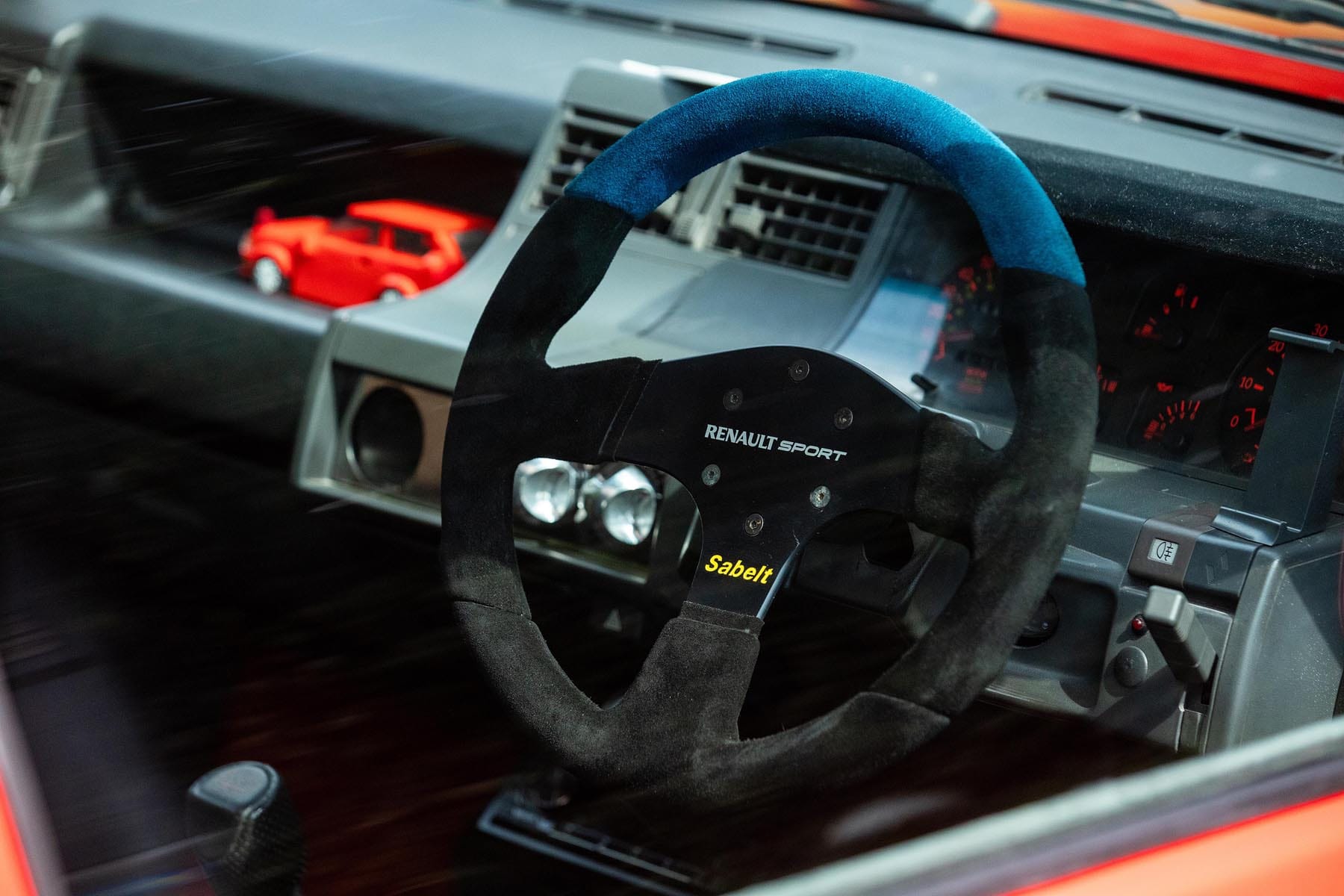
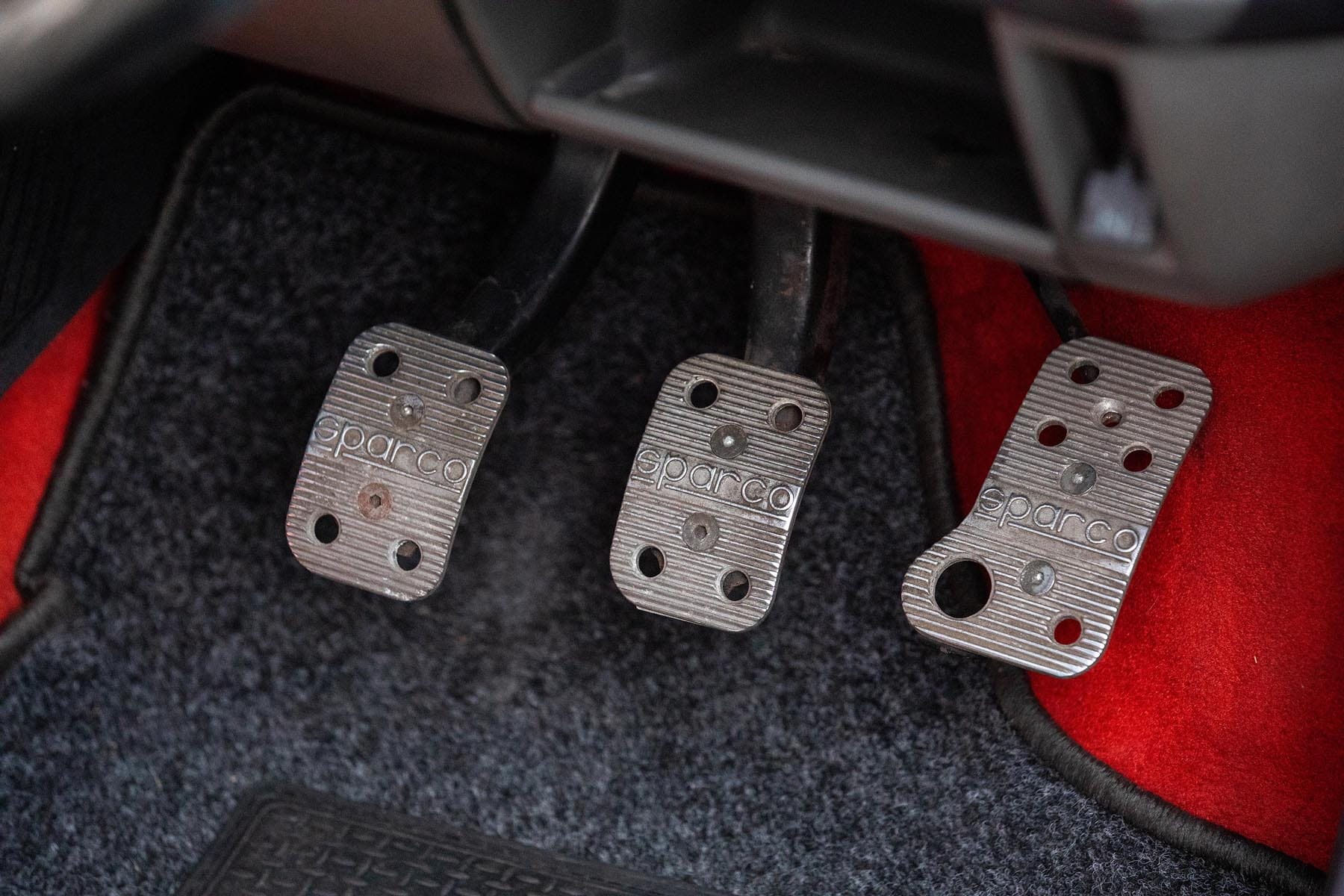
Aaron’s approach was not to wrap the car in cotton wool because of its past. Instead, he set about fixing what needed attention, sharpening the details and making it usable. The dashboard and centre console were flocked, the seats were changed, a different steering wheel went in, the carburettor jets changed and set up, and the engine was tuned properly.
The interior was trimmed further, giving the cabin the purposeful feel of a car built to be driven rather than simply displayed. And that is exactly how Aaron treats it. This is not a static showpiece trading only on its past life. It is a boosted, compact, old-school hot hatch that still gets used hard. As I found out to great joy when I accompanied Aaron on the BlackBall 100 charity car run.
Built for Boost
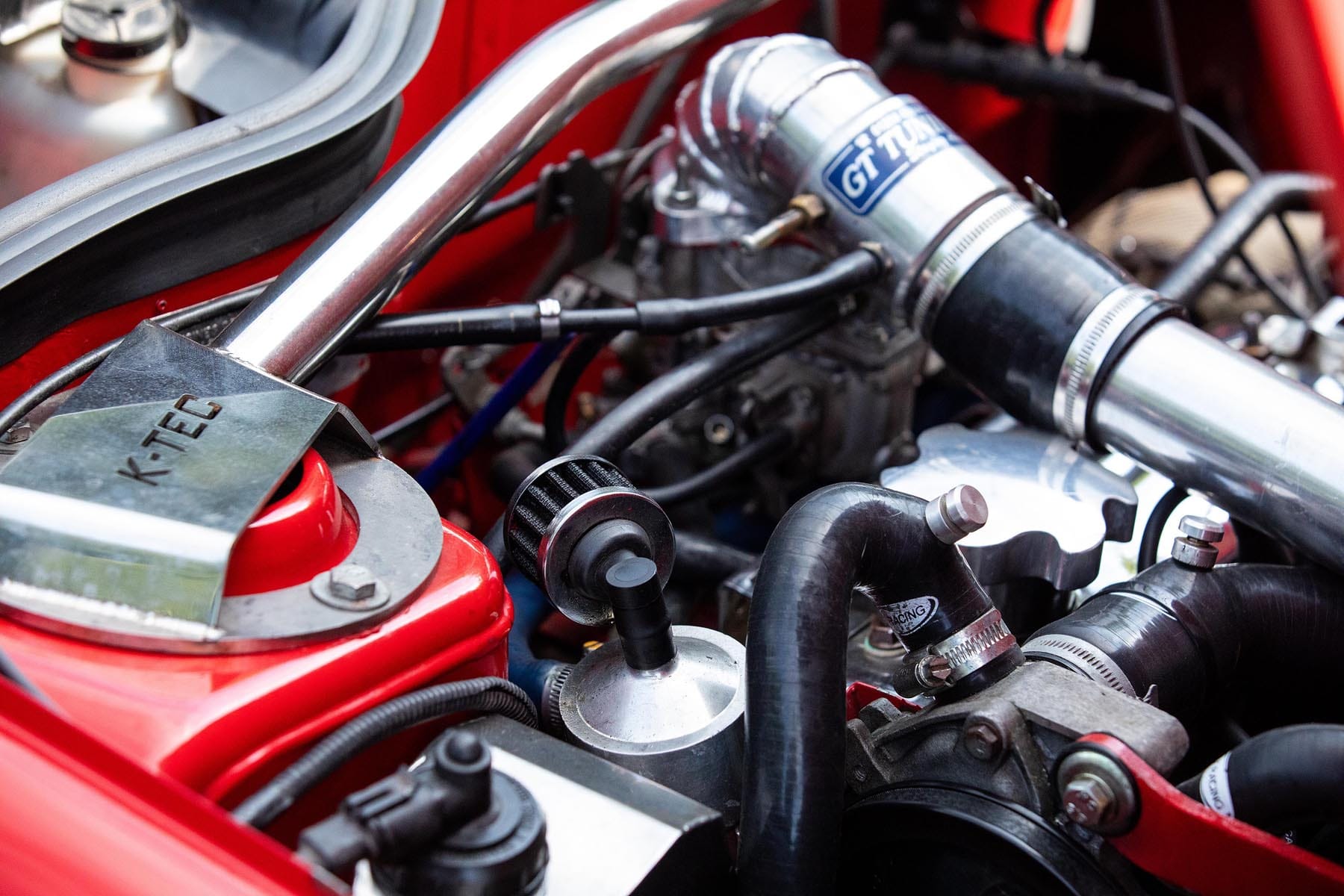
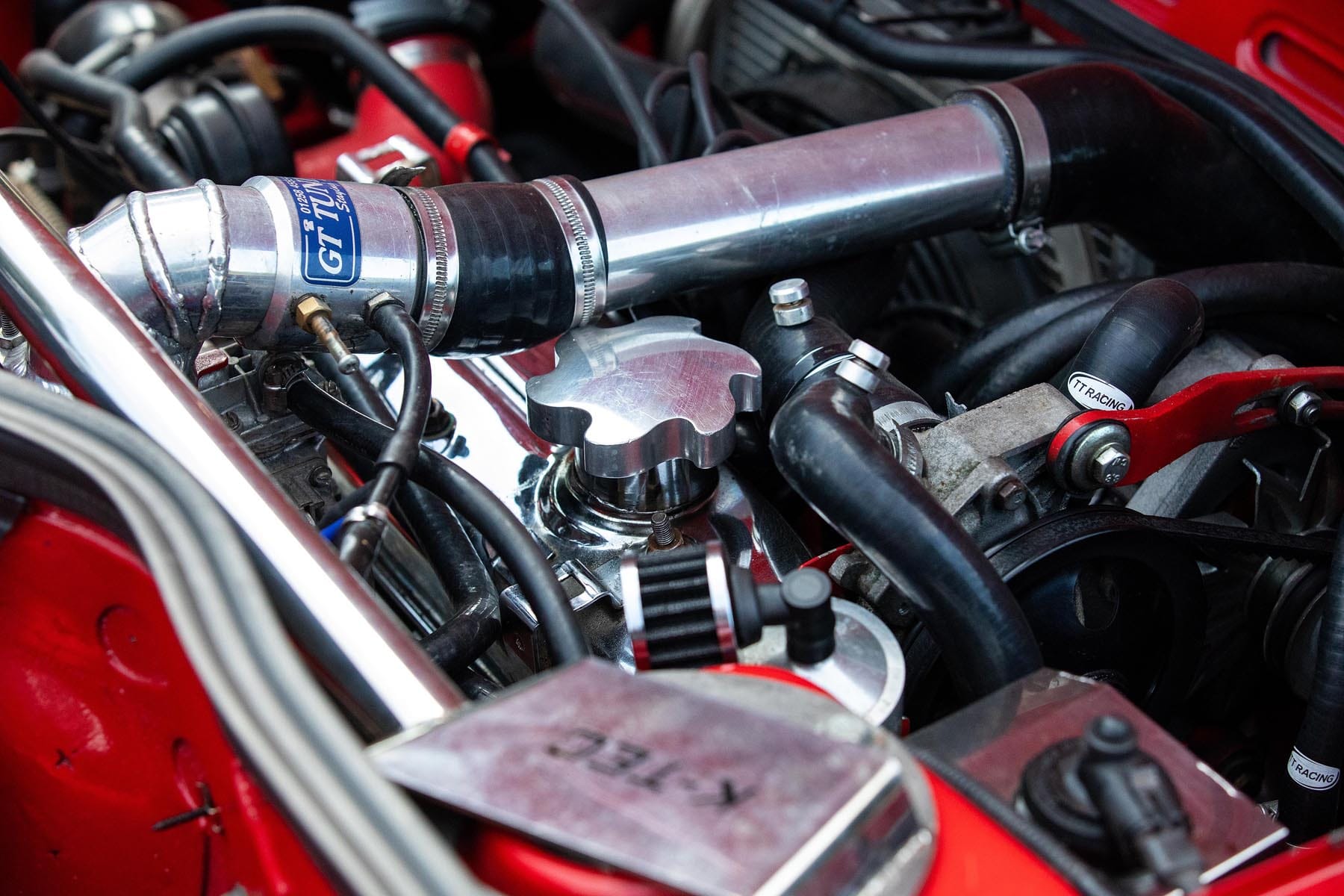
Under the bonnet, the Renault 5 GT Turbo’s appeal is still rooted in its small-capacity, turbocharged punch. Aaron’s car builds on that with a heavily upgraded specification aimed at making the most of the platform without losing the raw character that makes these cars so addictive.
The engine features a modified full-race-spec cylinder head with 2mm oversized valves, new valve seats, race-spec springs and matched manifolds. A CTM cam and followers were part of the specification, although Aaron explains that the cam has since been removed and a more regular item refitted. The bottom end is equally serious, with steel liners, steel rods, forged pistons, a vernier pulley, heavy-duty bearings, competition gaskets and bolts, a fully balanced crank, a lightened flywheel and an upgraded oil pump.
Boost comes from a T28 turbo running at 19 psi, while gases exit through a Scorpion 2.5-inch exhaust system. The result is around 200 bhp — a serious figure in a car as light, short and urgent as a Renault 5 GT Turbo. Aaron is less certain on the torque figure, but the important part is obvious from the way he talks about it: the car delivers the hit he wants.
Chassis, Stance and Attitude
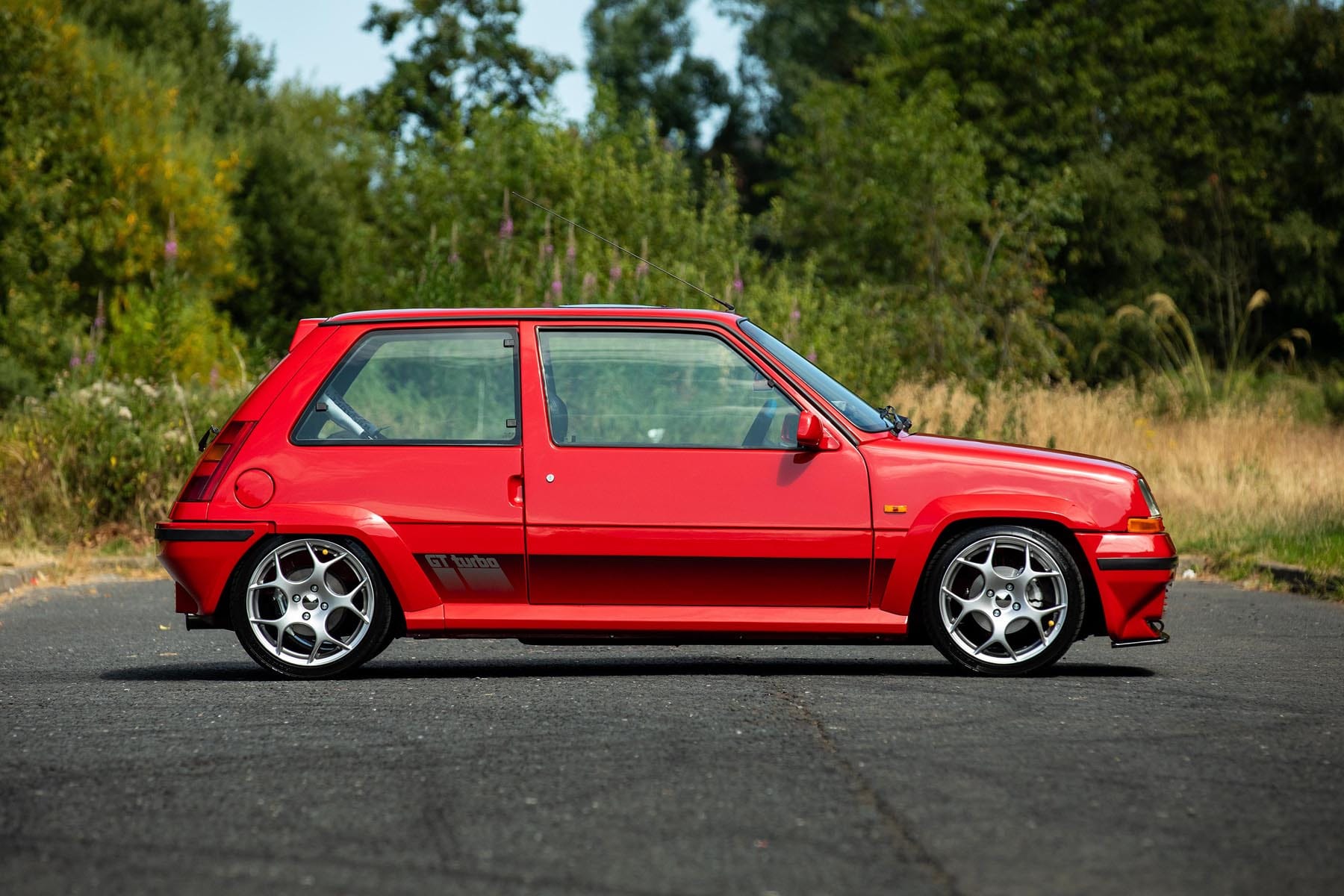
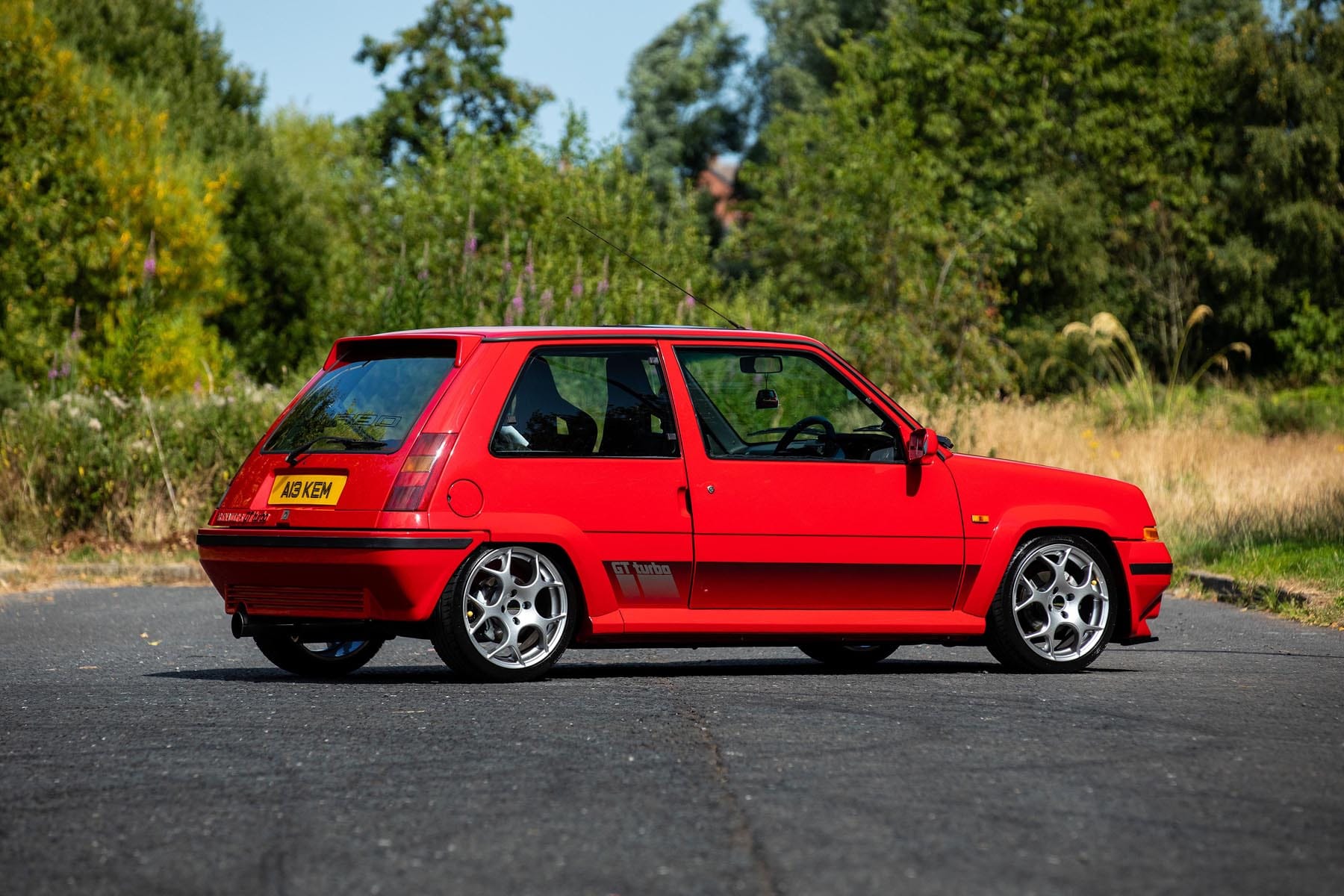
The chassis has been given the same period-correct performance focus. The rear runs GAZ shocks, while the front uses AVO shocks and springs with the car sitting 60mm lower. The wheels are 16-inch TSW Venoms, wrapped in 195/40 R16 Nankang tyres, giving the car a stance that leans proudly into its modified heritage.
It is this mix of provenance and personalisation that makes Aaron’s Renault stand out. Many magazine-feature cars from the 1990s have either vanished, been returned to standard or been locked away as nostalgia pieces. This one has lived several lives and continues to evolve. Its past matters, but it is not trapped by it.
Why It Still Matters
For enthusiasts of a certain generation, the Renault 5 GT Turbo represents more than a fast small car. It was a gateway into tuning culture, magazine features, late-night drives and the belief that a lightweight hatchback with boost could embarrass far more expensive machinery. Aaron’s car captures that spirit perfectly.
It has the backstory to attract attention, the modifications to back it up, and the owner attitude to stop it becoming too precious. Aaron does not speak about the car like a collector guarding an investment. He speaks about it like someone who waited years to get the right Renault 5, then made sure it felt right to him.
That is why this red GT Turbo works so well. It is part survivor, part throwback and part personal build. It carries a slice of 1990s modified-car culture, but it is not pretending the story ended there. In Aaron’s hands, the Renault 5 GT Turbo is still doing what it was always meant to do: making boost, making noise and making memories.